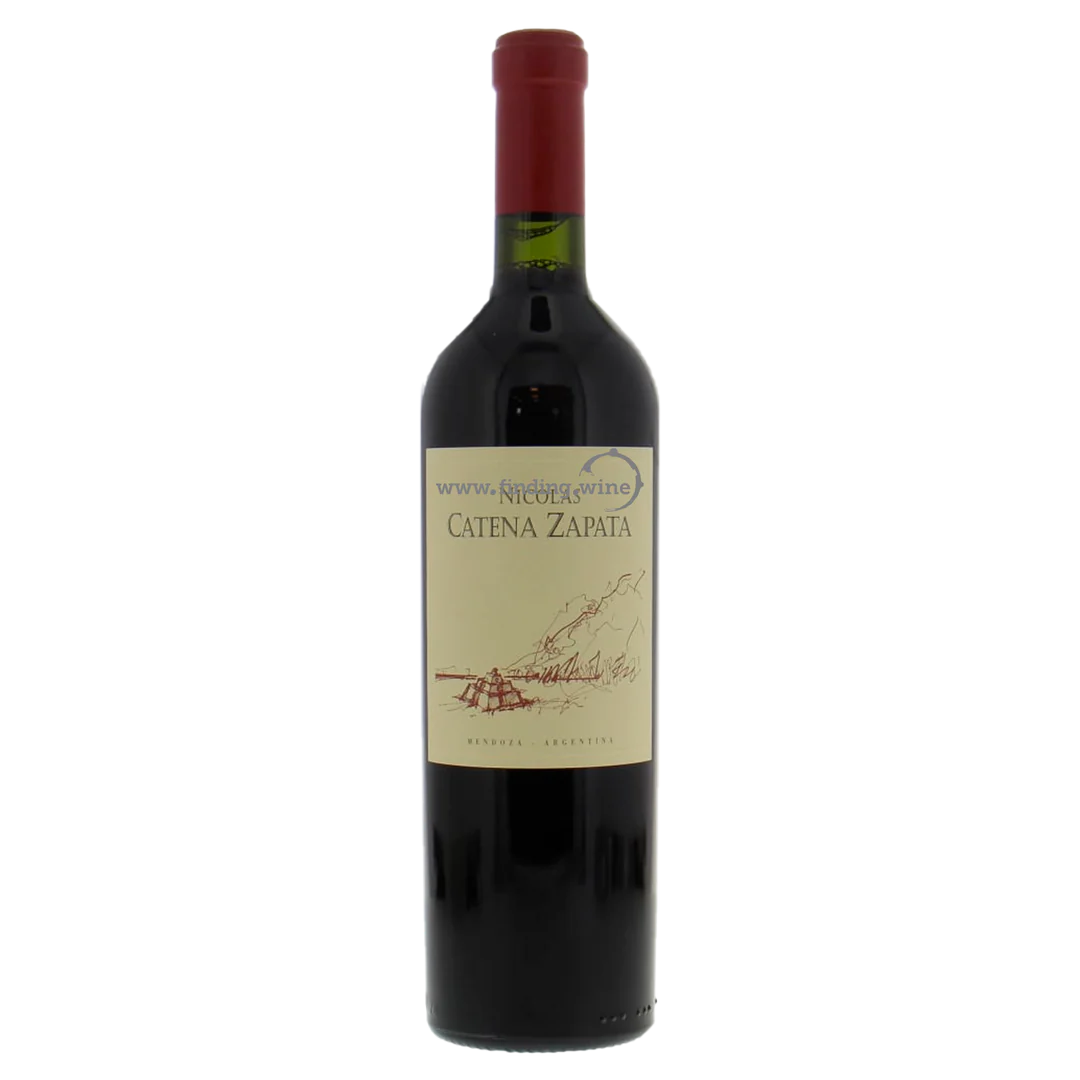
2020 Catena Zapata "Nicolas", Mendoza, Argentina
ABOUT THIS WINE
With its inaugural 1997 vintage, Nicolás Catena Zapata became the first luxury cuvée from Argentina to be exported around the world. The wine recreates the “Original Bordeaux Blend” of the 18th and 19th Centuries, when Malbec dominated over Merlot and was in equal standing to Cabernet Sauvignon in the Médoc. Prephylloxeric Malbec and Cabernet Sauvignon massale selections of ungrafted vines give rise to this wine, opening a window to the past from the mountain vineyards of Mendoza, Argentina.
The harvest is done by hand and the fermentation takes place in small oak barrels, concrete and stainless-steel tanks, at temperatures of 26-28ºC for about 10-15 days. The post-fermentative maceration lasts between 5 and 10 days. The wine carries out the malolactic fermentation and is then aged in French oak barrels for 18 months. At the end of winter Dr. Nicolás Catena Zapata oversees the final blend before bottling.
54% Cabernet Sauvignon, 25% Cabernet Franc, 21% Malbec
ABOUT THIS PRODUCER
Great wines begin in the vineyard. Their vision is to make rich and unforgettable wines that are true to the special place they come from. The story of Catena is the story of Argentine wine.
In 1902, Nicola Catena planted his first Malbec vineyard in Mendoza. Domingo, Nicola's eldest son, inherited his father's dream and took the family winery to the next level, building the Catena business to become one of the largest vineyard holders in Mendoza. Like his father before him, Domingo Catena fiercely believed that Argentine Malbec could make a wine as worthy as any first-growth Bordeaux.
In the 1960s, however, the Argentine economy imploded and inflation rates soared. Familia Catena struggled to hang on. It got so bad one year that Domingo realized it would cost him more to harvest than to leave the fruit on the vines. His 22- year-old son Nicolás Catena Zapata, a recent PhD graduate in economics, advised him not to harvest.
Argentina's years of turmoil continued as it became Nicolás's turn to take the reins of the family winery. Against a challenging backdrop of political and economic instability, with a military government that had just declared war on the United Kingdom, Nicolás concentrated on expanding distribution throughout the country. But in the early 1980s, Nicolás got an opportunity he couldn't refuse: He left Argentina for a short sabbatical to become a visiting scholar of economics at the University of California, on the world-renowned campus at Berkeley.
Until that time, no one in the new world had dreamed of challenging France on the wine front—except, that is, for the Californians, who had decided to defy Europe by creating a Cabernet Sauvignon and a Chardonnay that could rival the best French wines. California—and especially the sun-drenched vineyards of Napa Valley—proved to be a serendipitous inspiration to Nicolás and his wife, Elena. They spent weekends visiting the wineries with their youngest daughter Adrianna in a backpack. And Nicolás Catena Zapata returned to Mendoza with a vision in mind: A Californian Vision.
Today, the wines of Bodega Catena Zapata are sourced from six historic estate vineyards: Angélica, La Pirámide, Nicasia, Domingo, Adrianna and Angélica Sur. The family’s Adrianna Vineyard at almost 5,000 feet elevation has been called the Grand Cru of South America.
Original: $119.99
-65%$119.99
$42.00Product Information
Product Information
Shipping & Returns
Shipping & Returns
Description
ABOUT THIS WINE
With its inaugural 1997 vintage, Nicolás Catena Zapata became the first luxury cuvée from Argentina to be exported around the world. The wine recreates the “Original Bordeaux Blend” of the 18th and 19th Centuries, when Malbec dominated over Merlot and was in equal standing to Cabernet Sauvignon in the Médoc. Prephylloxeric Malbec and Cabernet Sauvignon massale selections of ungrafted vines give rise to this wine, opening a window to the past from the mountain vineyards of Mendoza, Argentina.
The harvest is done by hand and the fermentation takes place in small oak barrels, concrete and stainless-steel tanks, at temperatures of 26-28ºC for about 10-15 days. The post-fermentative maceration lasts between 5 and 10 days. The wine carries out the malolactic fermentation and is then aged in French oak barrels for 18 months. At the end of winter Dr. Nicolás Catena Zapata oversees the final blend before bottling.
54% Cabernet Sauvignon, 25% Cabernet Franc, 21% Malbec
ABOUT THIS PRODUCER
Great wines begin in the vineyard. Their vision is to make rich and unforgettable wines that are true to the special place they come from. The story of Catena is the story of Argentine wine.
In 1902, Nicola Catena planted his first Malbec vineyard in Mendoza. Domingo, Nicola's eldest son, inherited his father's dream and took the family winery to the next level, building the Catena business to become one of the largest vineyard holders in Mendoza. Like his father before him, Domingo Catena fiercely believed that Argentine Malbec could make a wine as worthy as any first-growth Bordeaux.
In the 1960s, however, the Argentine economy imploded and inflation rates soared. Familia Catena struggled to hang on. It got so bad one year that Domingo realized it would cost him more to harvest than to leave the fruit on the vines. His 22- year-old son Nicolás Catena Zapata, a recent PhD graduate in economics, advised him not to harvest.
Argentina's years of turmoil continued as it became Nicolás's turn to take the reins of the family winery. Against a challenging backdrop of political and economic instability, with a military government that had just declared war on the United Kingdom, Nicolás concentrated on expanding distribution throughout the country. But in the early 1980s, Nicolás got an opportunity he couldn't refuse: He left Argentina for a short sabbatical to become a visiting scholar of economics at the University of California, on the world-renowned campus at Berkeley.
Until that time, no one in the new world had dreamed of challenging France on the wine front—except, that is, for the Californians, who had decided to defy Europe by creating a Cabernet Sauvignon and a Chardonnay that could rival the best French wines. California—and especially the sun-drenched vineyards of Napa Valley—proved to be a serendipitous inspiration to Nicolás and his wife, Elena. They spent weekends visiting the wineries with their youngest daughter Adrianna in a backpack. And Nicolás Catena Zapata returned to Mendoza with a vision in mind: A Californian Vision.
Today, the wines of Bodega Catena Zapata are sourced from six historic estate vineyards: Angélica, La Pirámide, Nicasia, Domingo, Adrianna and Angélica Sur. The family’s Adrianna Vineyard at almost 5,000 feet elevation has been called the Grand Cru of South America.