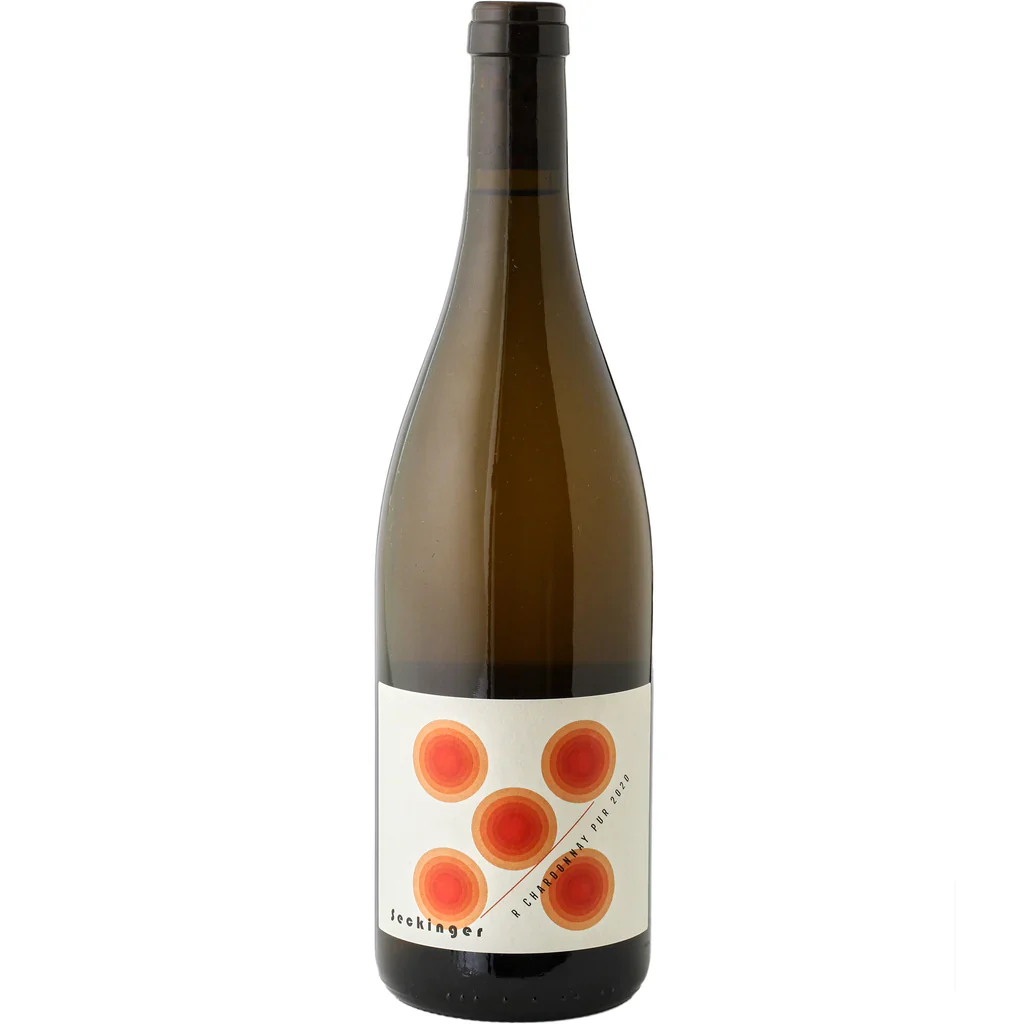
2021 Seckinger "R Chardonnay Pur", Pfalz, Germany
ABOUT THIS WINE
This Chardonnay come from a blending of sandstone and marl soils the famous Reiterpfad Grand Cru vineyard (VDP.GROSSES GEWÄCHS), and the two Premier Cru vineyards (VDP.ERSTE LAGE) of Linsenbusch and Nußbien. These are not wines for those that enjoy the so-called ‘traditional’ style, often with at least some residual sugar and a more fruit-forward style. Wines are vinified bone dry. What’s more, the moniker of ‘natural winemaker’ or ‘avant-guard winemaker’ irritates Jonas. He’s proud of them working biodynamically, but he’s not dogmatic about issues such as sulphur, and prefers to talk about his craft as cellar master:
Our goal is to harvest all wines at a maximum of 90 °Oechsle, so that we do not exceed 12.5 percent alcohol by volume…Then, I must follow the wines, barrel by barrel.
Whole-clusters maceration for 10-12 hours; then it’s free run juice and a continuing of the spontaneous fermentation. There is nothing technical going on here; there are no temperature controlled tanks. Wine and lees are transferred to barrels made from a relatively unknown small local cooperage called Michel Gieß. Depending on the barrel, some are topped up, others are left to create a controlled oxidation. Natural decant and sulphur addition take place before bottling. The sulphur is not demonized here, but reduced to an absolute minimum and only used when the wines demand it. Jonas says he works by intuition…smelling and tasting the wine daily, like his grandfather did.
This wine is the antithesis of what most people either love or hate about chardonnay: it’s cloudy, salty, savory, slightly oxidative (think Jura), and just 12% alcohol. There’s some fruit, but it’s not about the fruit. It’s a wine to drink thoughtfully, over several hours; if you drink it too quickly, you’ll miss the fascinating and delicious evolution.
ABOUT THIS PRODUCER
Seckinger’s wines have some producers in southern Pfalz scratching their heads, meanwhile Germany’s new generation of sommeliers are sipping gleefully. Was geht? Here’s a biodynamic Pfalz producer taking cues from the natural Chablis and Jura ouillé or topped-up contingent, as it digs into the terroir of their historic vineyards of mostly red sandstone (buntsandstein). Aber hallo! Seckinger’s making some outstandingly rakish wines bone dry, hazy and savoury!
Falstaff Magazine says about Jonas Seckinger: You can confidently count him among the protagonists of a precocious and well-trained generation of winegrowers who know exactly what they want: his wines already look amazingly mature and stylish. Seckinger produced his first wine at the age of 17, initially experimenting with an old wooden press in his parents' garage.
Joined by his brothers Lukas and Philipp, they farm 20 hectares near Deidesheim. Their farming is certified organic and practicing biodynamic.
Original: $31.99
-65%$31.99
$11.20Product Information
Product Information
Shipping & Returns
Shipping & Returns
Description
ABOUT THIS WINE
This Chardonnay come from a blending of sandstone and marl soils the famous Reiterpfad Grand Cru vineyard (VDP.GROSSES GEWÄCHS), and the two Premier Cru vineyards (VDP.ERSTE LAGE) of Linsenbusch and Nußbien. These are not wines for those that enjoy the so-called ‘traditional’ style, often with at least some residual sugar and a more fruit-forward style. Wines are vinified bone dry. What’s more, the moniker of ‘natural winemaker’ or ‘avant-guard winemaker’ irritates Jonas. He’s proud of them working biodynamically, but he’s not dogmatic about issues such as sulphur, and prefers to talk about his craft as cellar master:
Our goal is to harvest all wines at a maximum of 90 °Oechsle, so that we do not exceed 12.5 percent alcohol by volume…Then, I must follow the wines, barrel by barrel.
Whole-clusters maceration for 10-12 hours; then it’s free run juice and a continuing of the spontaneous fermentation. There is nothing technical going on here; there are no temperature controlled tanks. Wine and lees are transferred to barrels made from a relatively unknown small local cooperage called Michel Gieß. Depending on the barrel, some are topped up, others are left to create a controlled oxidation. Natural decant and sulphur addition take place before bottling. The sulphur is not demonized here, but reduced to an absolute minimum and only used when the wines demand it. Jonas says he works by intuition…smelling and tasting the wine daily, like his grandfather did.
This wine is the antithesis of what most people either love or hate about chardonnay: it’s cloudy, salty, savory, slightly oxidative (think Jura), and just 12% alcohol. There’s some fruit, but it’s not about the fruit. It’s a wine to drink thoughtfully, over several hours; if you drink it too quickly, you’ll miss the fascinating and delicious evolution.
ABOUT THIS PRODUCER
Seckinger’s wines have some producers in southern Pfalz scratching their heads, meanwhile Germany’s new generation of sommeliers are sipping gleefully. Was geht? Here’s a biodynamic Pfalz producer taking cues from the natural Chablis and Jura ouillé or topped-up contingent, as it digs into the terroir of their historic vineyards of mostly red sandstone (buntsandstein). Aber hallo! Seckinger’s making some outstandingly rakish wines bone dry, hazy and savoury!
Falstaff Magazine says about Jonas Seckinger: You can confidently count him among the protagonists of a precocious and well-trained generation of winegrowers who know exactly what they want: his wines already look amazingly mature and stylish. Seckinger produced his first wine at the age of 17, initially experimenting with an old wooden press in his parents' garage.
Joined by his brothers Lukas and Philipp, they farm 20 hectares near Deidesheim. Their farming is certified organic and practicing biodynamic.