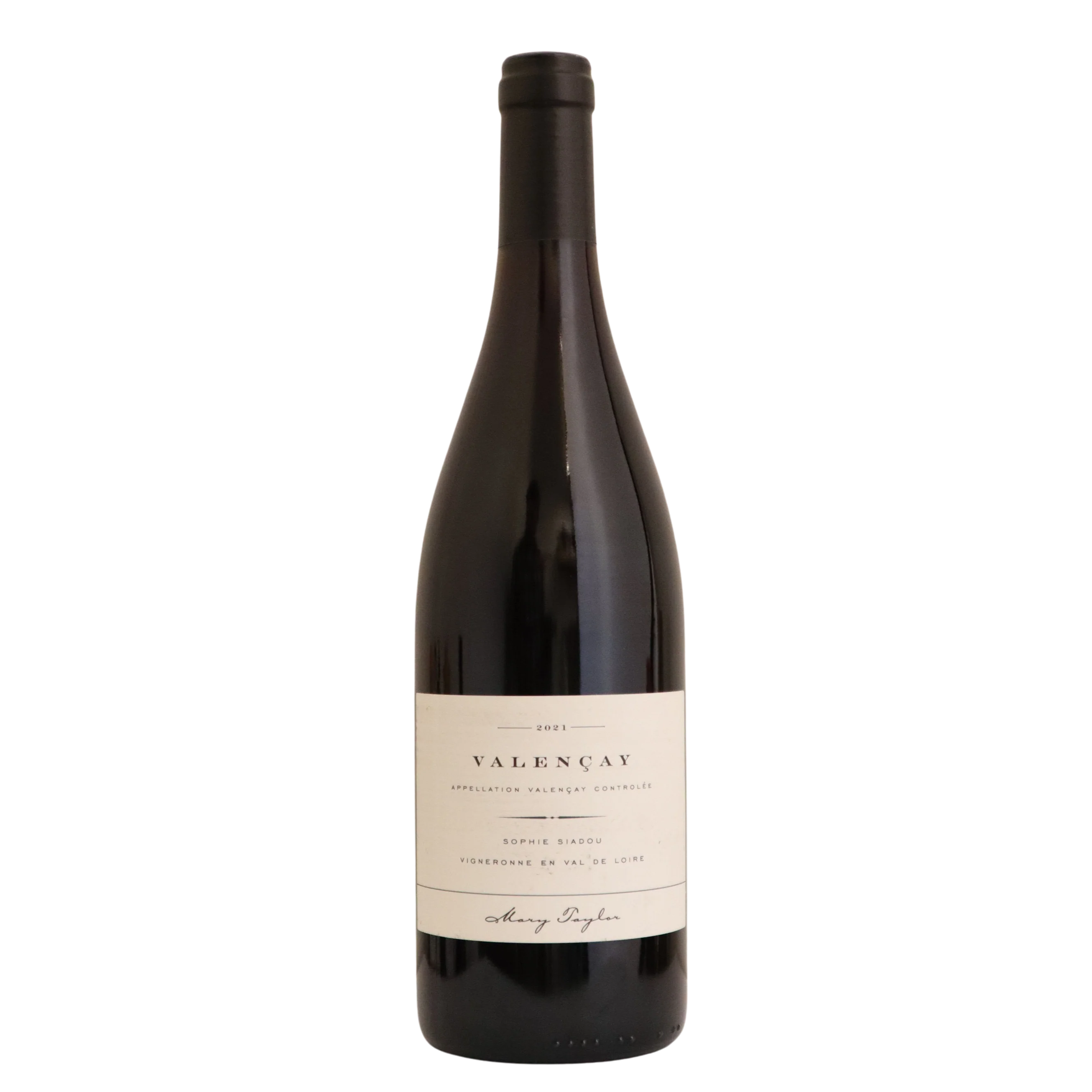
2021 Mary Taylor Valençay, Loire Valley, France
ABOUT THIS WINE
Best known for its famous pyramid-shaped goat cheese, the Valençay area of France’s Loire valley also produces an equally singular (if much lesser known) array of wines. What they lack in name recognition, however, they more than make up for in terms of sheer deliciousness and everyday charm— which illustrates an important principle. More often than not, the hidden values of the world of wine are discovered along the road less traveled, far from the common crowd.
Geographically, Valençay is separated into two main areas, each straddling either side of the Modon, a winding tributary of the famous Cher river. The first, “Les Terrajots,” is characterized by stony, flinty clay soils known as “perruches,” which contribute structure and depth of fruit to the area’s wines. The second, located near the loge à Perin— a tiny hut constructed in the middle of the vineyards at the end of nineteenth century— is defined by “silex,” a mix of clay, limestone and silica, which imparts freshness and brisk minerality. Together, this unique geographic profile results in bright, flinty whites derived from Sauvignon Blanc, and— as evidenced by this exquisite example from the family-run Domaine Jourdain— mouthwatering reds, which are produced from the region’s three main varieties: Gamay, Pinot Noir, and Côt (the local name for Malbec).
ABOUT THIS PRODUCER
Originally founded in 1960, the Jourdain estate has been run since 1990 by Sophie Siadou and her partner Francis Jourdain. Together, they sustainably farm approximately thirty hectares of vines, from which they craft their brilliant range of honest, regionally-expressive wines. Although the winery functions as a family affair, it was Sophie’s unique vision that informed this specific bottling, to which she has lent her name. Reflecting her holistic approach to the ecosystem of the vineyard and her careful attention to the nuances of her terroir, this wine was allowed to ferment naturally, using only the indigenous ambient yeasts present in the surrounding environment.
Product Information
Product Information
Shipping & Returns
Shipping & Returns
Description
ABOUT THIS WINE
Best known for its famous pyramid-shaped goat cheese, the Valençay area of France’s Loire valley also produces an equally singular (if much lesser known) array of wines. What they lack in name recognition, however, they more than make up for in terms of sheer deliciousness and everyday charm— which illustrates an important principle. More often than not, the hidden values of the world of wine are discovered along the road less traveled, far from the common crowd.
Geographically, Valençay is separated into two main areas, each straddling either side of the Modon, a winding tributary of the famous Cher river. The first, “Les Terrajots,” is characterized by stony, flinty clay soils known as “perruches,” which contribute structure and depth of fruit to the area’s wines. The second, located near the loge à Perin— a tiny hut constructed in the middle of the vineyards at the end of nineteenth century— is defined by “silex,” a mix of clay, limestone and silica, which imparts freshness and brisk minerality. Together, this unique geographic profile results in bright, flinty whites derived from Sauvignon Blanc, and— as evidenced by this exquisite example from the family-run Domaine Jourdain— mouthwatering reds, which are produced from the region’s three main varieties: Gamay, Pinot Noir, and Côt (the local name for Malbec).
ABOUT THIS PRODUCER
Originally founded in 1960, the Jourdain estate has been run since 1990 by Sophie Siadou and her partner Francis Jourdain. Together, they sustainably farm approximately thirty hectares of vines, from which they craft their brilliant range of honest, regionally-expressive wines. Although the winery functions as a family affair, it was Sophie’s unique vision that informed this specific bottling, to which she has lent her name. Reflecting her holistic approach to the ecosystem of the vineyard and her careful attention to the nuances of her terroir, this wine was allowed to ferment naturally, using only the indigenous ambient yeasts present in the surrounding environment.